
Emotional connection and distance in relationships
Attachment Styles Guide for Healthier Relationships

Content
Content
Relationships are the heart of human experience, forming the foundation upon which we build our lives, find meaning, and develop our sense of self. From the moment we are born until we take our last breath, the way we form, maintain, and nurture connections with others shapes our happiness, well-being, and even our mental and physical health in profound ways that science is only beginning to fully understand. The quality of our relationships predicts our life satisfaction more powerfully than wealth, fame, career success, or virtually any other factor that researchers have examined. Yet despite the central importance of relationships to human flourishing, many people struggle to create the close, loving connections they desire, repeating painful patterns across different relationships without understanding why.
Have you ever wondered why you love the way you do? Why do some people effortlessly create close, loving relationships characterized by trust, intimacy, and mutual support, while others struggle with emotional intimacy, feel anxious about losing their partner, or find themselves pushing away the very people they want to be close to? Why do some relationships feel easy and natural while others are marked by constant conflict, insecurity, or emotional distance? The answer to these questions often lies in something fundamental yet powerful that shapes our approach to love from our earliest days: attachment styles.
Attachment theory, first developed by British psychologist John Bowlby and later expanded by American-Canadian developmental psychologist Mary Ainsworth, explains how early childhood experiences with caregivers influence our approach to love and relationships throughout our lives. These early bonds—formed in the first years of life when our brains are most plastic and our need for care most absolute—lay the groundwork for how we connect with others, how we handle emotional intimacy, and how we respond to the inevitable challenges and conflicts that arise in close relationships. Understanding attachment theory provides a lens through which we can make sense of our relationship patterns, understand our partners more deeply, and ultimately develop the capacity for healthier, more fulfilling connections. In this comprehensive article, we will dive into the different attachment styles, explore how they develop and affect your relationships, and provide practical steps to foster healthier connections regardless of where you started.
What Are Attachment Styles?

Author: Amelia Hayes;
Source: psychology10.click
Attachment styles refer to the characteristic patterns of behavior, thinking, and emotional responding that dictate how we relate to the people closest to us, especially in intimate romantic relationships but also in close friendships, family relationships, and even our relationship with ourselves. These patterns develop early in life based on our experiences with primary caregivers and become internalized as mental models—sometimes called "internal working models"—that shape our expectations about relationships, our beliefs about ourselves as worthy of love, and our strategies for managing closeness and distance with others.
Attachment theory proposes that humans are born with an innate need to form close emotional bonds with caregivers, and that the quality of these early bonds has lasting implications for psychological development and relationship functioning throughout the lifespan. When caregivers are consistently responsive, available, and attuned to the child's needs, the child develops a sense of security—a felt sense that the world is safe, that others can be trusted, and that they themselves are worthy of love and care. When caregiving is inconsistent, unavailable, or frightening, different patterns emerge as the child adapts to their particular circumstances, developing strategies for getting their needs met within the constraints of their caregiving environment.
Attachment is not about dependency or neediness. It is about our fundamental human need for close emotional bonds. Understanding your attachment style is the first step toward creating the relationships you truly want and deserve.
— Dr. Sue Johnson
Attachment styles fall into four primary categories that have been consistently identified across cultures and research methodologies:
- Secure Attachment: Characterized by comfort with intimacy and autonomy, trust in relationships, and effective emotional regulation
- Anxious Attachment: Characterized by a strong desire for closeness combined with fear of abandonment and insecurity about the partner's love
- Avoidant Attachment: Characterized by discomfort with emotional closeness, emphasis on independence, and suppression of attachment needs
- Fearful-Avoidant (Disorganized) Attachment: Characterized by simultaneous desire for and fear of intimacy, often stemming from early trauma
Each attachment style carries its own blueprint for how individuals handle intimacy, trust, emotional vulnerability, conflict, and the balance between connection and autonomy. Understanding these patterns—in yourself and in your partners—provides crucial insight into relationship dynamics and opens pathways toward growth and healing.
Secure Attachment: The Foundation of Healthy Love
People with a secure attachment style generally feel comfortable with both intimacy and independence, able to move fluidly between connection and autonomy without excessive anxiety in either direction. They can give and receive love without being overwhelmed by fear of abandonment or suffocated by closeness, allowing for well-balanced, fulfilling relationships characterized by mutual support, trust, and genuine emotional connection. Securely attached individuals approach relationships from a position of confidence—not arrogance or invulnerability, but a basic trust that they are worthy of love and that others can generally be relied upon to be there for them.
Securely attached individuals likely had caregivers who were consistently responsive to their needs in childhood, offering both emotional support and encouragement of independence. These caregivers were attuned to their children's emotional states, providing comfort when needed, celebrating successes, and offering a secure base from which the child could explore the world. Importantly, secure attachment does not require perfect parenting—research suggests that caregivers need only be "good enough," responding appropriately to their children's needs approximately 30-50% of the time. What matters is the overall pattern of availability and responsiveness, along with repair when ruptures in connection occur.
Core Traits of Securely Attached People:
- High self-esteem and confidence in their worthiness of love and their relationships' stability
- Comfort with emotional intimacy, vulnerability, and depending on others when appropriate
- A healthy balance of independence and closeness, neither fearing intimacy nor avoiding autonomy
- Effective communication skills, including the ability to express needs, listen empathically, and resolve conflicts constructively
- Trust in their partner without excessive jealousy, possessiveness, or surveillance
- Ability to regulate emotions effectively, returning to baseline relatively quickly after distressing experiences
- Capacity to provide support to partners while also accepting support gracefully
- Resilience in the face of relationship challenges, viewing difficulties as problems to solve rather than evidence of relationship failure
How Secure Attachment Affects Romantic Relationships:
In romantic relationships, those with secure attachment are typically dependable, supportive, and loving partners who create a sense of safety that allows both individuals to flourish. They can express their feelings and needs openly and directly without fear of being judged, rejected, or abandoned, and they can receive their partner's expressions with empathy and responsiveness. Conflict, while never pleasant, doesn't threaten the fundamental stability of the relationship; instead, it's viewed as an opportunity for growth, understanding, and deepening intimacy through successful repair.
Partners with secure attachment tend to navigate the inevitable ups and downs of long-term relationships with greater resilience, maintaining their commitment and connection even during difficult periods. They create a stable, nurturing environment where both partners feel safe to be themselves—including their vulnerabilities, fears, and imperfections—without fear of rejection. Because of these qualities, secure attachment is often regarded as the ideal or "gold standard" for relationship functioning, associated with higher relationship satisfaction, greater longevity, and better outcomes across numerous measures of individual and relational well-being.
Developing Secure Attachment:
Even if you didn't start life with a secure attachment style, it is possible to develop what researchers call "earned security" later in life through self-awareness, therapeutic work, and experiences in healthy relationships. The brain remains plastic throughout life, and new relational experiences can gradually reshape the internal working models that guide our attachment behavior. Cultivating trust through consistent, reliable behavior; practicing open, honest communication; developing emotional regulation skills; and working through past attachment injuries in therapy are all key steps toward fostering a more secure attachment style. The journey may take time, but the research is clear: attachment styles can and do change.
Attachment
Anxious Attachment: The Fear of Being Alone

Author: Amelia Hayes;
Source: psychology10.click
Anxiously attached individuals experience a powerful craving for closeness combined with persistent insecurity about their partner's love and commitment. They are highly attuned to any signs of rejection, withdrawal, or abandonment—sometimes perceiving threats where none exist—and may become overly dependent on their partner for validation, reassurance, and emotional regulation. The anxiously attached person's emotional well-being is often tightly linked to the state of their relationship: when things are good with their partner, they feel wonderful; when there is distance or conflict, they may feel devastated, sometimes to a degree that seems disproportionate to the situation.
This attachment style typically develops when caregivers in childhood were inconsistent in their responsiveness—sometimes warm, available, and attuned, other times distracted, unavailable, or rejecting. This unpredictability creates anxiety about whether one's needs will be met and leads to hypervigilance about the caregiver's emotional state and availability. The child learns that expressing needs intensely sometimes works to bring the caregiver closer, reinforcing a pattern of escalating emotional expression and persistent proximity-seeking that continues into adult relationships.
Core Traits of Anxiously Attached People:
- Constant need for reassurance and validation that the partner loves them and won't leave
- Intense fear of abandonment or rejection that may be activated by relatively minor events
- Preoccupation with the relationship and partner's behavior, including extensive analysis of texts, tone, and actions
- Emotional highs and lows that are closely tied to partner's actions and the perceived state of the relationship
- Tendency to overanalyze interactions, catastrophize about relationship problems, or interpret ambiguous situations negatively
- Difficulty self-soothing or regulating emotions independently without partner's involvement
- May engage in "protest behaviors" when feeling disconnected, including excessive calling/texting, jealousy, or attempts to make partner jealous
- Strong desire for merger with partner, sometimes at the expense of individual identity or interests
How Anxious Attachment Affects Romantic Relationships:
Anxiously attached individuals are often described as "clingy," "needy," or "high maintenance"—labels that feel unfair but reflect the real impact their attachment behaviors can have on relationships. They frequently worry about their partner losing interest, finding someone better, or leaving, even when there is no objective evidence for these fears. This anxiety can manifest as behaviors that partners find overwhelming: frequent texting to check in, requests for reassurance that can feel endless, jealousy about friends or colleagues, emotional volatility, or protests when partners need space or independence.
The painful irony is that these behaviors, intended to bring the partner closer and secure the relationship, often push partners away, creating the very rejection and distance that the anxiously attached person fears. This can establish a self-fulfilling prophecy where anxiety about abandonment leads to behaviors that strain the relationship, confirming the anxious person's belief that they are not lovable enough to keep a partner. However, with the right partner—one who provides consistent emotional responsiveness and doesn't withdraw in the face of anxiety—anxiously attached individuals can feel increasingly secure over time, and their attachment anxiety may diminish significantly.
Coping with Anxious Attachment:
Building self-awareness is the crucial first step for individuals with anxious attachment, recognizing the patterns without harsh self-judgment. Practices such as mindfulness can help create space between anxious thoughts and behavioral responses, allowing the person to choose how to respond rather than reacting automatically. Self-compassion—treating oneself with the same kindness one would offer a struggling friend—can help soothe the painful feelings of inadequacy that often accompany anxious attachment. Clear, direct communication about needs, rather than indirect attempts to get reassurance, can improve relationship dynamics. Therapy, particularly cognitive-behavioral therapy (CBT) or attachment-focused approaches, can assist in reshaping thought patterns, developing self-soothing skills, and fostering healthier attachment behaviors over time.
Avoidant Attachment: The Fear of Intimacy

Author: Amelia Hayes;
Source: psychology10.click
Avoidant attachment develops when caregivers were emotionally distant, unresponsive, or unavailable during childhood, either physically absent or present but not emotionally attuned. The child learns that their emotional needs will not be met through connection with others and develops a compensatory strategy of self-reliance and emotional independence. As adults, individuals with avoidant attachment often view emotional closeness as uncomfortable, threatening, or unnecessary, maintaining distance in relationships and avoiding the vulnerability that deep intimacy requires.
The avoidant individual has learned to suppress their attachment needs—not because they don't have them (all humans have innate attachment needs), but because expressing those needs in childhood did not result in care and may have led to rejection or disappointment. The resulting adaptation involves deactivating the attachment system: minimizing the importance of relationships, emphasizing independence and self-sufficiency, and avoiding situations that might activate vulnerable emotions or dependency on others.
Avoidant individuals are not incapable of love or connection—they have simply learned that closeness is dangerous. Beneath their apparent self-sufficiency lies the same human longing for connection that exists in all of us, protected by defensive walls built in childhood.
— Dr. Amir Levine
Core Traits of Avoidantly Attached People:
- Strong preference for emotional distance, independence, and self-reliance in relationships
- Difficulty expressing feelings, needs, or vulnerabilities to partners
- Discomfort with partners' emotional expressions or requests for intimacy
- Fear of becoming too dependent on others or losing oneself in a relationship
- Tendency to downplay the importance of relationships or dismiss attachment needs
- Suppression or avoidance of emotions, sometimes to the point of limited emotional awareness
- Discomfort with conflict, often responding by withdrawing, shutting down, or becoming dismissive
- May idealize past relationships or hypothetical partners while finding fault with current partners
How Avoidant Attachment Affects Romantic Relationships:
In romantic relationships, avoidantly attached individuals often struggle with emotional closeness and may seem aloof, detached, or emotionally unavailable to their partners. They might avoid deep conversations about feelings, shy away from expressing love or appreciation directly, and resist relying on their partner for emotional support. When partners seek more closeness, the avoidant individual may feel suffocated and pull away further, creating a pursuing-distancing dynamic that is painful for both parties.
This emotional detachment can create a profound sense of loneliness and neglect for partners, who may feel that they are in a relationship alone, unable to reach the person they love. While avoidantly attached individuals genuinely value their independence and may feel comfortable with their approach to relationships, they often miss out on the deeper intimacy, connection, and support that relationships can provide. Conflict is particularly challenging, as avoidant individuals tend to withdraw, shut down emotionally, or dismiss the importance of issues rather than engaging in meaningful dialogue that could resolve problems and strengthen the relationship.
Overcoming Avoidant Attachment:
For individuals with avoidant attachment, learning to embrace vulnerability is the central challenge—recognizing that the self-protective walls built in childhood now prevent access to the intimate connection that adult life makes possible. Therapy, particularly emotionally focused therapy (EFT), can help address fears of intimacy and teach strategies for improving emotional openness, including recognizing and naming emotions, tolerating vulnerability, and responding to partners' bids for connection. Cultivating trust in relationships through small, gradual steps—sharing a bit more, allowing oneself to need someone, receiving care without deflecting—can lead to more fulfilling connections over time. The process requires patience and willingness to tolerate discomfort, but avoidant individuals can develop significantly more secure attachment patterns through sustained effort.Fearful-Avoidant (Disorganized)
Attachment: The Push-Pull Dynamic
Fearful-avoidant attachment, also called disorganized attachment, is the least common and most complex of the attachment styles, combining features of both anxious and avoidant patterns in a painful internal conflict. It typically stems from childhood experiences of trauma, neglect, abuse, or frightening caregiver behavior, where the very person who was supposed to provide safety and comfort was also a source of fear or harm. This creates an impossible situation for the developing child: the attachment figure is both the source of danger and the potential source of protection, leaving the child with no coherent strategy for managing their attachment needs.
As adults, individuals with fearful-avoidant attachment experience a simultaneous desire for connection and fear of being hurt, creating a push-pull dynamic in relationships where they alternately seek closeness and then retreat when intimacy feels too threatening. This oscillation can be confusing and exhausting for both the individual and their partners, creating relationships marked by intensity, unpredictability, and instability.
Core Traits of Fearful-Avoidantly Attached People:
- Intense simultaneous fear of both rejection/abandonment AND emotional intimacy/engulfment
- Strong desire for close relationships combined with deep-seated fear that closeness leads to pain
- Emotional instability and unpredictability in relationship behavior
- Profound difficulty trusting others due to past experiences of betrayal or harm
- May sabotage relationships when they become too close or too meaningful
- Unresolved trauma that intrudes into current relationships
- May dissociate or become overwhelmed when attachment system is strongly activated
- Tendency toward chaotic relationship patterns, including intense connections followed by dramatic ruptures
How Fearful-Avoidant Attachment Affects Romantic Relationships:
People with fearful-avoidant attachment often experience chaotic, roller-coaster relationships characterized by intense emotional highs and devastating lows. They may alternate between desperately seeking closeness and abruptly pushing their partner away, creating confusion and instability that can feel impossible to navigate. These individuals struggle deeply with trust, as their early experiences taught them that love and danger can coexist—that the people who are supposed to care for you can also hurt you profoundly.
In romantic relationships, their unpredictable behavior can lead to intense emotional conflicts, dramatic arguments, and frequent breakups followed by reconciliations. Because they oscillate between desiring intimacy and fearing it, partners may feel confused about where they stand, walking on eggshells, or emotionally drained by the relationship's unpredictability. However, with patient, consistent partners and significant therapeutic work, individuals with fearful-avoidant attachment can begin to break this cycle, gradually developing the capacity for more stable, trusting relationships.
Healing from Fearful-Avoidant Attachment:
Therapy is typically essential for those with fearful-avoidant attachment, particularly trauma-focused approaches such as EMDR (Eye Movement Desensitization and Reprocessing), somatic experiencing, or trauma-informed attachment therapy. Addressing the underlying trauma—processing the painful experiences that created the disorganized attachment pattern—is a necessary foundation for change. Learning to regulate overwhelming emotions, developing the capacity to stay present during intimacy rather than dissociating or fleeing, and gradually building trust through experiences of safe connection are all key components of healing. The process is often longer and more intensive than for other insecure attachment styles, but meaningful change is possible with appropriate support.
How Your Attachment Style Influences Adult Relationships
Author: Amelia Hayes;
Source: psychology10.click
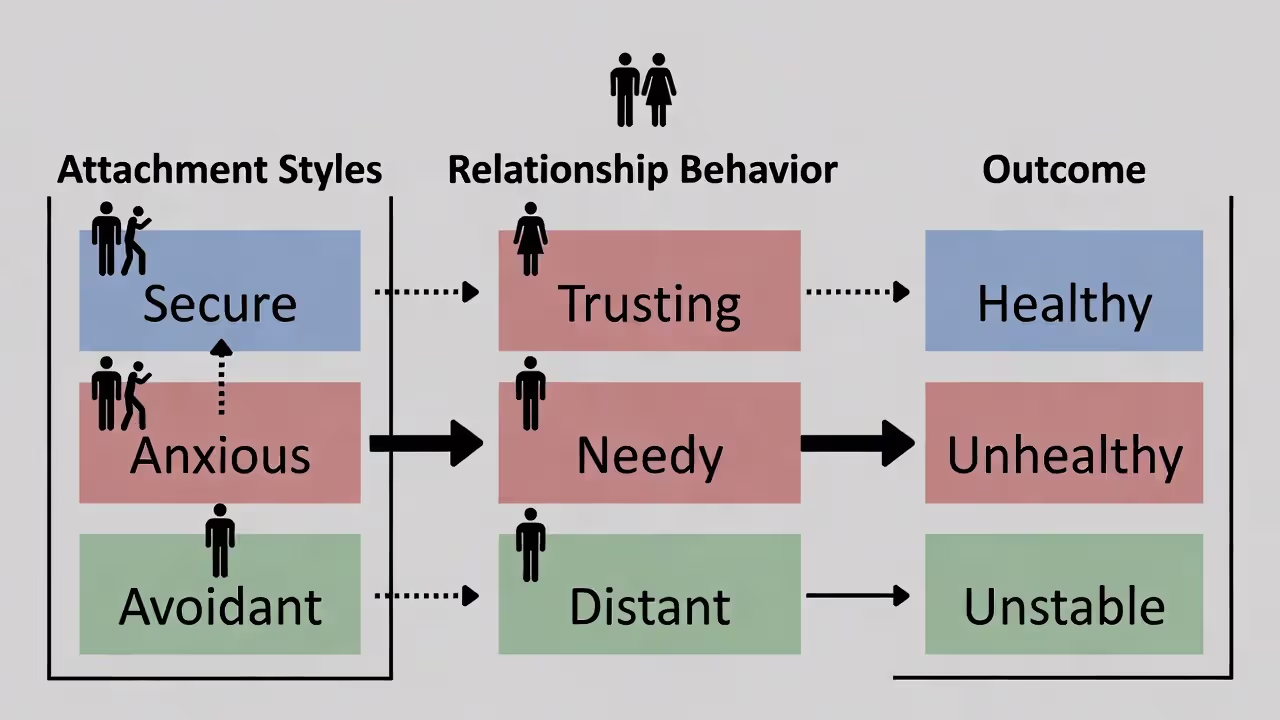
The attachment style you develop in childhood serves as a blueprint for your adult relationships, influencing virtually every aspect of how you connect with romantic partners. These patterns operate largely outside conscious awareness, feeling like "just who I am" rather than learned responses that can be changed. Understanding these influences is the first step toward gaining more choice in how you relate. Let us explore some of the key ways attachment styles shape romantic relationships:
Communication and Emotional Expression:
Your attachment style profoundly influences how you express emotions and communicate with your partner. Securely attached individuals tend to be more open, direct, and clear in their communication, expressing both positive feelings and concerns in ways that can be heard and addressed. Avoidant individuals may suppress emotional conversations, change the subject when things get deep, or provide minimal responses that leave partners feeling unheard. Anxiously attached people may overcommunicate when distressed, express emotions intensely in ways that can overwhelm partners, or demand reassurance repetitively. Fearful-avoidant individuals may be unpredictable, alternating between openness and withdrawal in ways that confuse partners about where they stand.
Conflict Resolution:
How you handle conflict is deeply tied to your attachment style and often determines whether conflicts strengthen or damage relationships. Securely attached individuals approach conflict with a problem-solving mindset, assuming that the relationship is fundamentally safe and that disagreements can be resolved through mutual effort. Avoidant individuals typically withdraw from conflict, shutting down emotionally, leaving the room, or dismissing issues as unimportant—behaviors that prevent resolution and frustrate partners who want to address problems. Anxiously attached individuals may become highly emotional during conflicts, interpreting disagreements as threats to the relationship's survival and escalating rather than de-escalating. Fearful-avoidant individuals may oscillate between these patterns or respond with intense emotional reactions that feel out of proportion to the issue.
The way we fight reveals our attachment style more clearly than almost anything else. In the heat of conflict, our deepest fears about relationships surface, and we fall back on the protective strategies we learned in childhood—for better or worse.
— Dr. Stan Tatkin
Trust and Dependency:
Trust and emotional dependency vary significantly by attachment style, shaping the fundamental sense of security within relationships. Securely attached people trust their partner and the stability of the relationship, comfortable depending on their partner and having their partner depend on them. Anxiously attached people often struggle with trust, requiring constant evidence that their partner loves them and won't leave, hypervigilant to any sign of wavering commitment. Avoidantly attached individuals resist depending on their partner, viewing dependency as dangerous weakness, and may be uncomfortable when partners depend on them. Fearful-avoidant individuals have profound trust issues rooted in early betrayal, wanting to trust but finding it terrifying to do so.
Emotional Intimacy:
Your comfort with emotional intimacy—the deep sharing of inner experience, vulnerability, and closeness—is shaped fundamentally by your attachment style. Securely attached individuals thrive in emotionally intimate relationships, experiencing closeness as nourishing rather than threatening. Avoidant individuals often find emotional intimacy uncomfortable, maintaining distance even in committed relationships and finding various ways to avoid deep vulnerability. Anxiously attached individuals desperately desire intimacy but may feel insecure even when it is offered, never quite able to relax into closeness without worrying about its loss. Fearful-avoidant individuals experience the most painful relationship with intimacy, yearning for it while simultaneously finding it terrifying, moving toward and away from closeness in a painful dance.
Can Your Attachment Style Change?
Attachment Style
While attachment styles are generally formed during early childhood through experiences with primary caregivers, they are emphatically not fixed or deterministic. The brain remains plastic throughout life, capable of forming new neural pathways in response to new experiences. Life experiences, increased self-awareness, therapy, and—perhaps most importantly—experiences in healthy relationships can influence and even fundamentally alter your attachment style over time. Research on "earned security" demonstrates that many people who had difficult childhoods and developed insecure attachment patterns nevertheless become securely attached adults through various pathways of growth and healing.
Healing Through Relationships:
One of the most powerful routes to attachment security is experience in a healthy relationship with a securely attached partner. When someone with anxious or avoidant attachment patterns enters a relationship with a consistently responsive, non-defensive, emotionally available partner, their nervous system gradually learns that relationships can be safe. The repeated experience of expressing needs and having them met, of being accepted even in vulnerability, of weathering conflicts that get resolved—these experiences slowly reshape internal working models. This doesn't mean that insecurely attached individuals need to find perfect partners; rather, relationships where emotional needs are met consistently enough, where ruptures are repaired, and where both partners are committed to growth can facilitate significant positive change over time.
Therapy and Personal Growth:
Therapy can be a powerful catalyst for understanding and changing attachment patterns, often accelerating change that might otherwise take many years or never occur. Therapeutic approaches like CBT can help identify and restructure the thought patterns that maintain insecure attachment. Emotionally focused therapy (EFT) works directly with attachment dynamics in couples, helping partners become more securely bonded. Trauma-informed therapy addresses the wounds that often underlie fearful-avoidant attachment. Individual therapy provides a relationship—with the therapist—that can itself be healing, as the therapeutic bond offers an experience of consistent, attuned responsiveness that may have been absent in early life.
Key Steps Toward Earned Security:
- Developing self-awareness about your attachment patterns without shame or self-criticism
- Understanding the childhood origins of your attachment style with compassion for your younger self
- Recognizing when attachment patterns are activated and learning to respond rather than react
- Building emotional regulation skills to manage intense attachment-related emotions
- Practicing new behaviors in relationships, even when they feel uncomfortable
- Choosing partners who are capable of emotional responsiveness rather than repeating harmful patterns
- Seeking therapy when needed, particularly for trauma-related attachment issues
- Cultivating self-compassion as a foundation for secure self-relating
Steps to Build Healthier Attachment in Relationships

Author: Amelia Hayes;
Source: psychology10.click
Regardless of your current attachment style, there are concrete steps you can take to foster healthier, more secure connections in your romantic life. Change requires patience, practice, and often professional support, but meaningful improvement is achievable for anyone willing to do the work.
Build Self-Awareness:
The foundation of any attachment work is understanding your own patterns—not intellectually, but with genuine insight into how attachment shows up in your body, emotions, and behaviors. Reflect on your relationship history: What patterns recur? How do you typically respond when you feel disconnected from your partner? What triggers your attachment anxiety or avoidance? Understanding your attachment style allows you to recognize when old patterns are being activated and to make more conscious choices about how to respond. Journaling, mindfulness practice, and therapy can all support the development of this crucial self-awareness.
Practice Open Communication:
Communication is the foundation of secure relating, and improving communication skills can shift relationship dynamics regardless of attachment style. If you tend to avoid difficult conversations (avoidant pattern), practice bringing up issues you might normally suppress. If you tend to overcommunicate or demand reassurance (anxious pattern), practice expressing your needs directly and clearly rather than indirectly or repetitively. For all styles, regular "state of the union" conversations with your partner—scheduled times to check in about the relationship—can prevent issues from festering and build a habit of open dialogue.
Develop Emotional Regulation:
For individuals with anxious or fearful-avoidant attachment, learning to manage intense emotions is essential for relationship health. When the attachment system is activated, emotions can feel overwhelming, leading to behaviors that damage relationships. Mindfulness teaches the capacity to observe emotions without immediately acting on them. Self-soothing techniques—deep breathing, grounding exercises, physical self-care—can calm the nervous system when it is aroused. Journaling can help process emotions rather than acting them out. The goal is not to suppress emotions but to develop the capacity to feel them fully while choosing how to respond.
Create Security Through Actions:
For those with avoidant or fearful-avoidant tendencies, the path to more secure attachment involves taking small, gradual steps toward emotional vulnerability. Share thoughts and feelings more openly, even when it feels risky. Ask for support when you need it, allowing yourself to depend on your partner. Practice staying present during emotional conversations rather than withdrawing. Notice when you are distancing and consciously move toward connection instead. Each small act of vulnerability that is met with acceptance gradually builds evidence that closeness is safe.
Seek Professional Help:
If attachment issues are significantly impacting your relationships or your quality of life, professional help can provide tools and support that accelerate healing. Therapists specializing in attachment, trauma, or couples work understand these patterns deeply and can offer interventions specifically designed to address attachment-related challenges. This might include individual therapy, couples therapy, or group therapy with others working on similar issues. Seeking help is not a sign of weakness but a recognition that some challenges are difficult to address alone.
Attachment Style Combinations in Relationships
One of the most fascinating aspects of attachment theory is understanding how different attachment styles interact when two people come together in a relationship. The particular combination of attachment styles in a couple creates distinctive dynamics, challenges, and opportunities for growth. Understanding these combinations can help couples navigate their differences with greater compassion and effectiveness.
Secure + Secure: The Ideal Foundation
When two securely attached individuals form a relationship, they create a stable, supportive foundation characterized by mutual trust, effective communication, and resilience in the face of challenges. Both partners feel comfortable with intimacy and independence, able to support each other during difficult times while maintaining their individual identities. Conflicts are approached constructively, with both partners assuming good intentions and working collaboratively toward resolution. While no relationship is without challenges, secure-secure pairings tend to navigate difficulties with relative ease and report the highest levels of relationship satisfaction.
Secure + Anxious: The Calming Effect
When a securely attached person partners with someone who has anxious attachment, the secure partner's consistent responsiveness can gradually calm the anxious partner's fears over time. The secure partner provides the reliable emotional availability that the anxious partner craves, without becoming overwhelmed by the need for reassurance. This combination can be highly successful when the secure partner maintains their responsive presence even when the anxious partner's fears are activated, and when the anxious partner is committed to developing greater self-regulation and trust. Over time, the anxious partner may become more secure through the repeated experience of having their emotional needs met consistently.
Secure + Avoidant: The Bridging Dynamic
A secure partner paired with an avoidant partner can help draw the avoidant person toward greater intimacy and emotional openness over time. The secure partner's non-demanding availability creates safety for the avoidant partner to gradually lower their defenses, while their comfort with independence prevents them from pursuing the avoidant partner in ways that would trigger further withdrawal. This combination requires patience from the secure partner, who must accept a slower pace of emotional intimacy while gently encouraging greater openness. When successful, the avoidant partner may develop more comfort with vulnerability through the experience of safe connection.
Anxious + Avoidant: The Protest-Withdraw Cycle
Perhaps the most challenging and unfortunately common combination is the anxious-avoidant pairing, which creates a painful pursuer-distancer dynamic that can feel impossible to escape. The anxious partner's need for closeness and reassurance activates the avoidant partner's need for space, causing them to withdraw. This withdrawal triggers the anxious partner's abandonment fears, leading to intensified pursuit—more calls, more demands for reassurance, more emotional expression—which drives the avoidant partner further away. Both partners are caught in a cycle that confirms their worst fears: the anxious partner feels abandoned, the avoidant partner feels suffocated, and neither gets their needs met.
Breaking this cycle requires both partners to understand the dynamic and make conscious changes. The anxious partner must learn to self-soothe rather than pursuing when distressed, giving the avoidant partner space without interpreting distance as rejection. The avoidant partner must recognize that their withdrawal causes real pain and make efforts to stay engaged, even when their instinct is to flee. With mutual understanding and effort—often supported by couples therapy—this combination can become functional, though it requires sustained work from both partners.
Anxious + Anxious: Mutual Intensity
Two anxiously attached partners can create a relationship characterized by intense emotional connection but also high volatility. Both partners understand each other's need for closeness and reassurance, which can create deep bonding. However, both are also prone to interpreting ambiguous situations negatively and to emotional reactivity when their fears are triggered. Without at least one partner who can provide grounding during conflict, anxious-anxious pairs may experience frequent emotional crises and difficulty finding stability. Success requires both partners developing better emotional regulation and learning to provide reassurance to each other rather than both simultaneously seeking it.
Avoidant + Avoidant: Parallel Lives
Two avoidantly attached partners may create a relationship characterized by significant independence and emotional distance. Both partners respect each other's need for space, and neither makes demands for emotional intimacy that would feel overwhelming. While this can create a stable, low-conflict relationship, it may also lack the deep emotional connection and vulnerability that characterize truly intimate partnerships. Both partners may feel lonely within the relationship but unsure how to bridge the emotional gap. Growth for this pairing requires both partners recognizing the value of emotional intimacy and taking risks with vulnerability, despite the discomfort this creates.
The Neuroscience of Attachment
Author: Amelia Hayes;
Source: psychology10.click
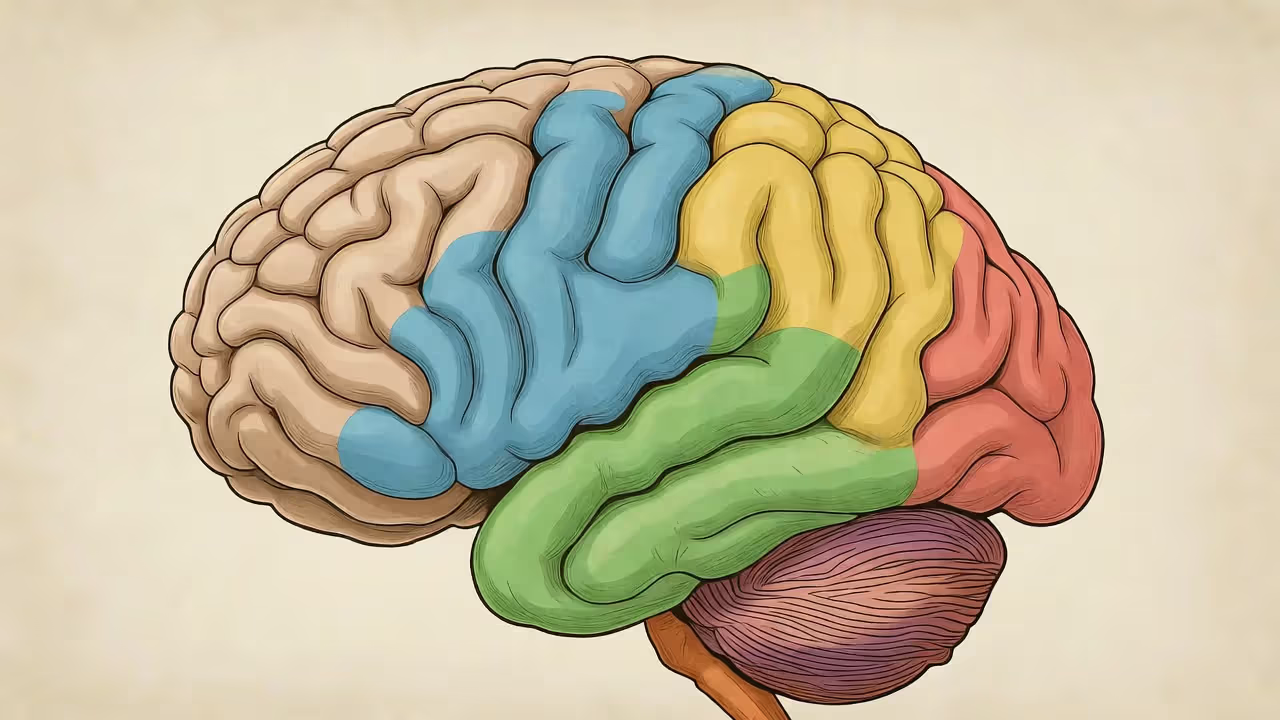
Understanding the neuroscience behind attachment provides deeper insight into why attachment patterns feel so automatic and why change requires sustained effort. Attachment is not merely psychological—it is encoded in the structure and function of the brain, particularly in regions involved in threat detection, emotional regulation, and social bonding.
The amygdala, often called the brain's alarm system, plays a central role in attachment processes. In individuals with anxious attachment, the amygdala tends to be hyperactive, triggering alarm responses to situations that securely attached individuals would perceive as neutral or only mildly threatening. This heightened amygdala activity explains why anxiously attached people may feel intense fear in response to brief separations or delayed text responses—their brain is literally perceiving threat where others would not.
The prefrontal cortex, responsible for executive functions like reasoning and emotional regulation, modulates amygdala activity. In securely attached individuals, the prefrontal cortex effectively regulates the amygdala's alarm responses, allowing for measured responses to relationship challenges. In those with insecure attachment, this regulatory function may be impaired, leading to emotional responses that feel overwhelming and difficult to control. The good news is that the prefrontal cortex continues developing throughout life and can be strengthened through practices like mindfulness and therapy.
Neurochemical systems also underlie attachment processes. Oxytocin, often called the "bonding hormone," is released during physical affection and creates feelings of trust and connection. Individuals with secure attachment tend to have well-regulated oxytocin systems, experiencing its bonding effects fully. Those with insecure attachment may have dysregulated oxytocin responses, either experiencing less bonding in response to affection (avoidant) or becoming overly dependent on partner presence for oxytocin release (anxious). Understanding these biological underpinnings helps explain why attachment patterns feel so fundamental and automatic—they are literally encoded in our neurobiology.
Attachment Across the Lifespan
While attachment patterns are established in early childhood, they continue to influence us and can be modified throughout the lifespan. Different life stages present both challenges and opportunities related to attachment.
Adolescence and Young Adulthood:
During adolescence, attachment begins shifting from primary focus on parents to peers and romantic partners. This transition can be particularly challenging for those with insecure attachment, as they bring their established patterns into new types of relationships. However, adolescence and young adulthood also offer opportunities for corrective experiences—healthy friendships and first romantic relationships can begin to shift attachment patterns in positive directions. Young people who develop close, trusting friendships may find their attachment security increasing even without formal intervention.
Partnership and Marriage:
Committed romantic relationships offer powerful opportunities for attachment healing but also present significant challenges when partners have conflicting attachment needs. The intensity and intimacy of long-term partnership activates attachment systems strongly, for better and worse. Couples who understand attachment dynamics and are committed to creating security together can experience profound healing through their relationship. Couples who don't understand these patterns may find themselves locked in painful cycles that erode love over time.
Parenthood:
Becoming a parent powerfully activates one's own attachment history, as caring for a child often brings up memories and feelings from one's own childhood. Parents with insecure attachment may find their patterns triggered by their children's needs, potentially passing attachment insecurity to the next generation. However, parenthood also offers a profound opportunity for healing—by consciously choosing to provide the responsive, attuned caregiving one may not have received, parents can both give their children secure attachment and heal their own attachment wounds in the process.
Later Life:
As people age and face losses—of spouses, friends, health, independence—attachment needs do not diminish but remain central to well-being. Securely attached older adults tend to cope better with losses and maintain more satisfying relationships. However, later life also offers continued opportunity for attachment growth. Long-term marriages can deepen in security over decades of shared experience. Relationships with adult children and grandchildren provide ongoing attachment bonds. And even in late life, therapy can help individuals develop more secure patterns that improve their remaining years.
Decoding the Way You Love

Author: Amelia Hayes;
Source: psychology10.click
Understanding your attachment style is like unlocking a secret code to how you love and connect with others, providing insight into patterns that may have puzzled you for years. Whether you have a secure, anxious, avoidant, or fearful-avoidant attachment style, recognizing your patterns can empower you to build healthier, more fulfilling relationships through conscious choice rather than automatic reaction. Your attachment style is not a fixed destiny but a starting point—a map of where you came from that need not determine where you are going.
The research on attachment across the lifespan is clear: change is possible at any age, through relationships, through therapy, through dedicated inner work. The neural pathways that encode our attachment patterns were shaped by experience and can be reshaped by new experience. This does not mean that change is easy or quick—attachment patterns developed over years or decades of repetition and reinforced by countless relationship experiences. But with patience, persistence, and appropriate support, meaningful change is achievable.
By building self-awareness about your patterns, practicing effective communication, developing emotional regulation skills, taking risks with vulnerability, and seeking professional support when needed, you can navigate the complexities of love with greater skill and ease. Relationships may never be perfect—they involve two imperfect humans attempting the challenging task of meeting each other's needs while maintaining their own identities. But with the right tools, the right mindset, and commitment to growth, you can love in a way that brings you closer to the happiness, security, and deep connection that every human heart deserves.
This article provides general information about attachment styles and relationships and is not intended as professional psychological advice. If you are experiencing significant relationship difficulties or attachment-related distress, please consult with a qualified mental health professional for personalized assessment and treatment.
Frequently Asked Questions
Related Stories

Read more
Read more




The content on psychology10.click is provided for general informational and inspirational purposes only. It is intended to share evidence-based insights and perspectives on psychology, relationships, emotions, and human behavior, and should not be considered professional psychological, medical, therapeutic, or counseling advice.
All information, articles, and materials presented on this website are for general educational purposes only. Individual experiences, emotional responses, mental health needs, and relationship dynamics may vary, and outcomes may differ from person to person.
Psychology10.click makes no representations or warranties regarding the accuracy, completeness, or reliability of the content provided and is not responsible for any errors or omissions, or for decisions or actions taken based on the information presented on this website. Readers are encouraged to seek qualified professional support when dealing with personal mental health or relationship concerns.