Logo psychology10.click

Logo psychology10.click

Independent global news for people who want context, not noise.

The Psychology of Procrastination: Why Your Brain Thrives on Delays
Sep 19, 2024
|
30 MIN
|
COGNITION
Procrastination is one of the most perplexing human behaviors. Despite knowing that delaying tasks often leads to stress, missed opportunities, or poor performance, we continue to do it. Whether it's postponing work assignments, delaying household chores, or putting off important decisions, procrastination is something nearly everyone struggles with at some point in life.

Read more

The Psychology of Procrastination: Why Your Brain Thrives on Delays

Top Stories

Success doesn't guarantee fulfillment
Why Do I Feel Empty Even When Everything Is "Fine"? The Psychology of Emotional Emptiness
Jan 16, 2026
|
28 MIN
|
MOOD
Stable career, decent relationships, bills paid — yet something feels fundamentally missing. If you've ever wondered «why am I unhappy when everything is fine?» you're far from alone. This in-depth guide explores the psychology behind emotional emptiness: disconnection from your authentic self, chronic emotional suppression, meaning deficits, attachment wounds, and unprocessed grief. Discover how modern life amplifies the void through social media comparison, achievement addiction, and overstimulation. Learn to read emptiness as signal rather than flaw, understand when it crosses into clinical territory, and find practical pathways out — from values clarification and emotional reconnection to daily presence practices and professional support that bridges the gap between functioning and truly living.

Read more

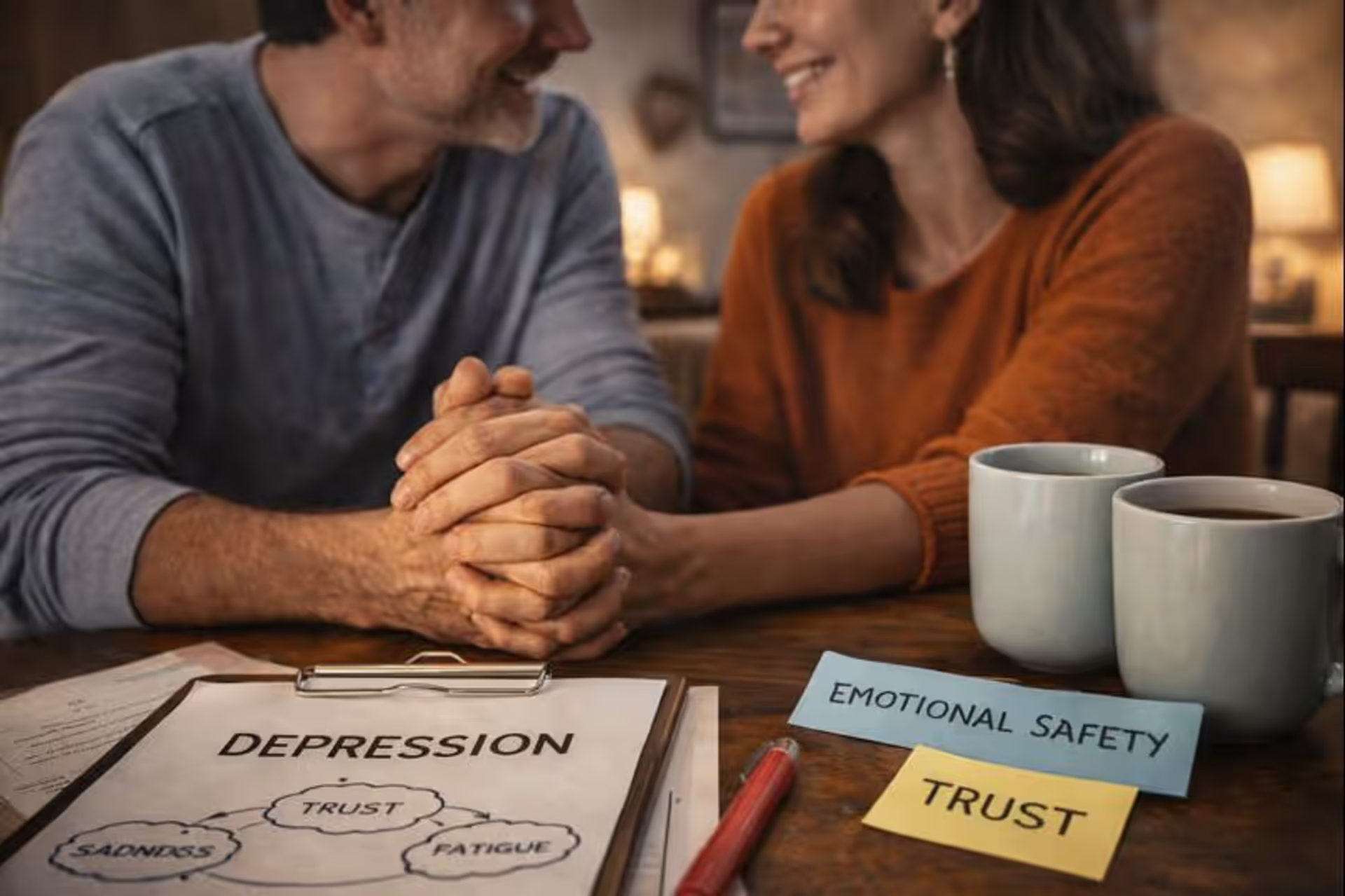
Healthy Relationships: Communication, Trust, and Emotional Safety
Dec 29, 2025
|
29 MIN
|
ATTACHMENT
The myth that real love should be effortless has quietly destroyed more relationships than infidelity ever has. The truth? Lasting partnerships are built through daily, unglamorous practice — and the research proves it. This comprehensive guide dismantles romantic myths and replaces them with what actually works: mastering communication beyond the «Four Horsemen» (criticism, contempt, defensiveness, stonewalling), understanding trust as multidimensional and rebuildable, creating emotional safety through consistent responsiveness and protected vulnerability, navigating attachment styles that shape every interaction, and surviving major transitions from parenthood to career upheaval. Includes practical daily rituals, conflict resolution strategies, boundary-setting guidance, and honest answers about when professional help becomes essential.

Read more

Trending

Negative self-talk and distorted thinking
Thought Traps: How Cognitive Distortions Cloud Your Reality
Sep 16, 2024
|
28 MIN
|
ANXIETY
«I'm such a failure.» «I'll never be good enough.» These automatic thoughts aren't facts — they're cognitive distortions, systematic thinking errors that cloud your perception and fuel anxiety, depression, and low self-esteem. This comprehensive guide breaks down 10 common distortions — from all-or-nothing thinking and catastrophizing to emotional reasoning, personalization, and labeling — with real-life examples and a quick-reference table. Discover the neuroscience behind why these patterns persist, learn evidence-based strategies to break free including mindfulness, thought journaling, and cognitive restructuring, and build long-term resilience through self-compassion and balanced thinking.

Read more

Silent Struggles: How Social Media Impacts Depression Rates in the U.S.
01:05
2 views
Silent Struggles: How Social Media Impacts Depression Rates in the U.S.
Sep 29, 2025
|
24 MIN
|
DIGITAL
Top U.S. research reveals a complex relationship between social media use and depression, showing that risk varies by age, gender, and usage patterns. Studies highlight that adolescents and young adults are most vulnerable, especially with passive, comparison-driven scrolling. At the same time, social platforms can offer support and connection when used intentionally. This article explores who is most at risk, when social media can help, and evidence-based steps families can take to reduce harm and protect mental health.

Read more

Latest articles

Person scrolling a social media feed of smiling posts and likes
Beyond Positivity: Redefining Happiness in a World Obsessed with Cheerfulness
Sep 24, 2024
|
30 MIN
|
FULFILLMENT
This article examines the roots of modern happiness obsession, including social pressure to remain cheerful and its impact on mental health. It explores how constant positivity can limit emotional range and increase distress, then offers a healthier redefinition of happiness—one that values authenticity, emotional flexibility, self-acceptance, and personal growth rather than perpetual joy. This article dives deep into the roots of this happiness obsession, exploring the pressure to be cheerful at all times, how it impacts our mental health, and more importantly, how we can redefine happiness to include authenticity, emotional flexibility, and personal growth.
The Neuroscience of Habit Loops: How to Rewire Your Brain for Success
Sep 27, 2024
|
28 MIN
|
COGNITION
In this article, we’ll delve into the neuroscience of habit formation, explore how habit loops work, and offer practical strategies for rewiring your brain to build habits that propel you toward success. By understanding the science behind habits, you can take control of your behavior, break free from self-destructive patterns, and cultivate routines that support your long-term goals.

Most read

Micro-moments of joy in everyday life
Micro-Moments of Joy: How Tiny Rituals Can Shift Your Mood
Sep 19, 2024
|
29 MIN
|
FULFILLMENT
In this article, we’ll explore the science behind micro-moments of joy, how tiny rituals can transform your mental and emotional landscape, and how to incorporate them into your daily life to cultivate a greater sense of happiness and connection. By focusing on small, intentional practices, you can create a ripple effect of positivity that enriches not only your mood but also your relationships and overall quality of life.

Read more

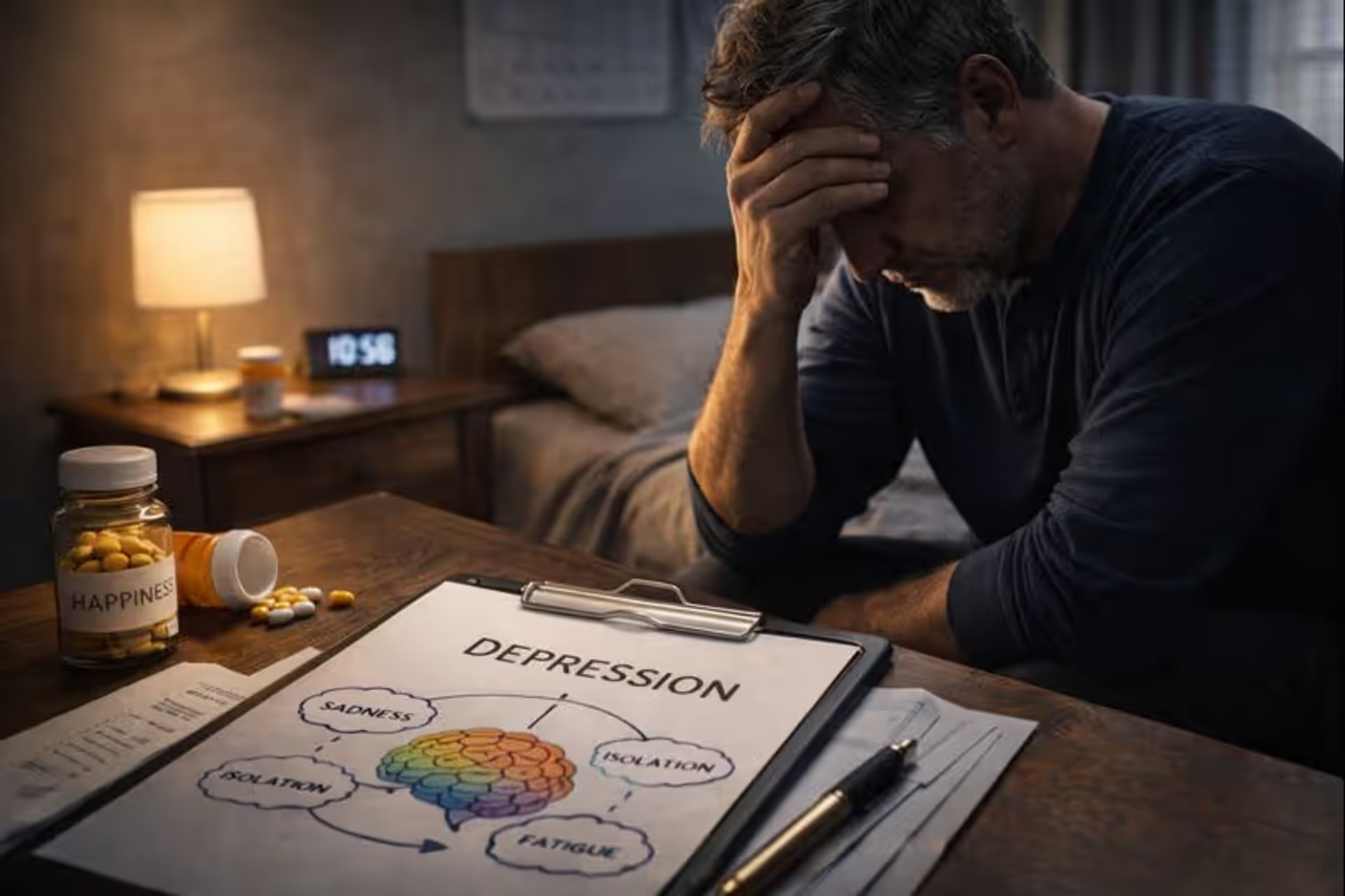
Depression in Disguise
Depression in Disguise: How High-Functioning Individuals Mask Their Pain
Sep 16, 2024
|
30 MIN
|
MOOD
They hit every deadline, maintain an active social life, and seem to have it all together — yet inside, they're exhausted, empty, and barely holding on. High-functioning depression affects millions who never match the stereotype of a «depressed person.» This in-depth guide explains what high-functioning depression actually is, how it differs from classic depression, and why perfectionists and overachievers are especially vulnerable. Discover the hidden warning signs — persistent fatigue, emotional numbness, chronic self-doubt, and private withdrawal — the serious consequences of leaving it untreated, and practical steps for seeking help, whether you recognize yourself in this description or want to support someone you love.

Read more

In depth

Can Money Really Buy Happiness? What the Latest U.S. Studies Reveal

Can Money Really Buy Happiness? What the Latest U.S. Studies Reveal

Sep 29, 2025
|
30 MIN
|
FULFILLMENT

Few questions have captivated Americans more persistently than this: can money really buy happiness? It's a question whispered in corporate boardrooms and shouted across dinner tables, debated by philosophers and quantified by economists. For a nation built on the promise of opportunity and prosperity, understanding the relationship between wealth and well-being strikes at the heart of the American Dream itself.

Recent years have brought remarkable clarity to this age-old question—and surprising complexity. Groundbreaking research from Princeton University in 2010 suggested that happiness plateaus once household income reaches approximately $75,000 annually, implying that additional wealth beyond that threshold brings diminishing emotional returns. This finding shaped public discourse for over a decade, offering a seemingly simple answer: yes, money buys happiness, but only up to a point.

Yet newer studies, including influential 2021 research from the University of Pennsylvania published in the Proceedings of the National Academy of Sciences, challenge this conclusion. These findings suggest that happiness continues rising with income well beyond $75,000, with no clear plateau in sight. The debate intensified further when the researchers engaged in an "adversarial collaboration," publishing reconciled findings in 2023 that revealed even more nuance about the money-happiness relationship.

The truth, as the latest U.S. studies reveal, is complex. The relationship between money and...

Read more

disclaimer

The content on psychology10.click is provided for general informational and inspirational purposes only. It is intended to share evidence-based insights and perspectives on psychology, relationships, emotions, and human behavior, and should not be considered professional psychological, medical, therapeutic, or counseling advice.

All information, articles, and materials presented on this website are for general educational purposes only. Individual experiences, emotional responses, mental health needs, and relationship dynamics may vary, and outcomes may differ from person to person.

Psychology10.click makes no representations or warranties regarding the accuracy, completeness, or reliability of the content provided and is not responsible for any errors or omissions, or for decisions or actions taken based on the information presented on this website. Readers are encouraged to seek qualified professional support when dealing with personal mental health or relationship concerns.